_edited_edited_edi.jpg)
Penrhyn Castle - Wales
- Sep 27, 2025
- 6 min read
Updated: Oct 25, 2025
September 2025 - feeling Autumnal!
My journey into blogging and journaling starts in Wales. I was recently renovating a property for a client there so was frequently travelling along the breathtaking North Wales coastline. This week marked the project's conclusion, and as I finished a bit earlier than expected, I couldn't resist taking a brief five-minute detour on my way home to visit the National Trust property, Penrhyn Castle. It's fitting to start with a National Trust site, as my passion for historic houses began in my childhood. I was always fascinated with the interiors and how they had evolved over the years, what fabrics were available and to see some of the most stunning wallpapers. I think also who designed them and of course the stories that each told.
With schools back and it being the afternoon, I anticipated it would be quieter— it was. I had never visited or researched this castle before, so I knew nothing about it beforehand, making it an ideal starting point.
The Gatehouse, although it appears medieval from the road, serves more as a stylistic feature of the castle's entrance. There was once a fortified manor house here and some of its remnants are still visible within the castle.

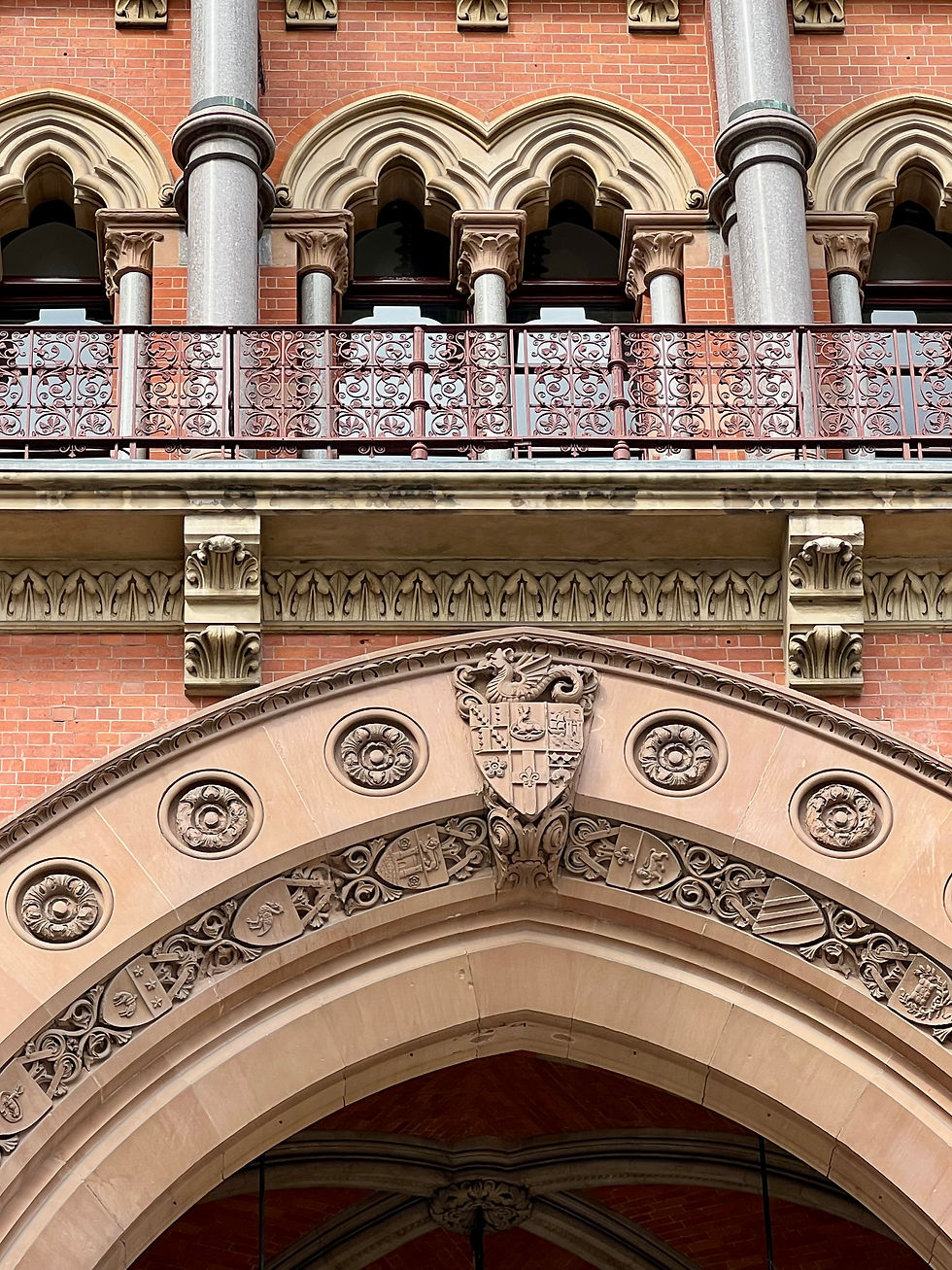
The drive to the car park is fairly long (here's a small tip: if you notice cars parked at the bottom, continue driving as there are plenty of parking spaces further along). I approached the walk to the castle from the courtyard side, which could easily function as a main entrance due to its impressive facade. It wasn't what I anticipated—bold and dramatic for sure but it appeared slightly somber, especially on a gloomy day—but given that it was constructed between 1820 and 1837, I was quite surprised by the Neo Norman style architecture, as this was a relatively niche style in the 19th century, emerging from the Gothic Revival, which I have certainly seen more of. I believe this is one of the most renowned examples, so if you're interested in this style, it's well worth a visit just for the exterior. I was certainly intrigued to see the interior.

Earl Grey was calling so straight to the cafe in the stable courtyard ( tip - go to main castle cafe) Earl Grey served in paper cup - disappointing, but soon realised this was not the main cafe and the seating was outside so understandable. My time was limited so couldn't linger outside for long but i wanted to visit the walled garden. Some maintenance was underway but it was still impressive. Considering its September still plenty of colour and lovely to see the bees still busy.


Photo:

Formal garden as you enter with symmetry, topiary, ponds (with newts)
Walter Speed is recognized for his work on the gardens, with a career spanning over 58 years at Penryhn, earning him the Victoria Medal of Honour for Horticulture from Queen Victoria herself. He was evidently highly esteemed and deeply committed to his position at Penryn, serving under three Lords. He passed away at the age of 84 in 1921, which was considered a very good age at the time—wonder if this was due to the fresh Welsh air and the fresh produce he grew!
The ponds sit beautifully within the parterre layout of the upper terrace - surrounded by topiary and formal planting.
Ponds were sometimes designed in gardens not only for aesthetics but also for microclimate benefits as they can help maintain humidity for plants.
I can imagine the family taking a stroll through the walled garden and sitting on a bench admiring the beautiful work of Walter Speed.
A must see down at the bottom of the walled garden is the Bog Garden - featuring a huge array of Giant Rhubarb which i have never seen before! (i have photos but won't spoil it incase you visit - they are impressive!)
Paths lead out of the garden from different ends so you can soon find your way around, a little short steep hill takes you back to the castle.
Interior: WOW!
I won't continuously share photos of every room inside the castle because it's something you truly need to experience firsthand. The transition from the solemn medieval exterior to the astonishing detail and splendor inside is remarkable. While we can all search online or read books about historical houses—I have many—you can't fully appreciate the history, design, the families, their lifestyles, and their visitors until you walk through them.
From the Grand Hall, adorned with stunning stained glass, intricate stonework, and carvings, to the warm and inviting formal Dining Room, elegantly set with china and a dinner menu to evoke the ambiance of an evening. The family's collection of paintings creates a gallery-like atmosphere, and you must gaze up at the ornate ceiling.
The Library was impressive, housing around 1800 books spanning various genres from history to politics, exuding a gentleman's club vibe. This was the room where men would retire after dinners. The adjacent Drawing Room, incorporating part of the original house, has interiors filled with detailed wood carvings. I was amazed by the craftsmanship evident in the woodwork alone, with pillars flanking the windows and intricate detailing around the arched doorways and doors. While admiring the doors, the guide in the room kindly demonstrated the door's weight and by slightly closing it, revealing its heaviness despite being supported by only two very large hinges. He also pointed out a detail I would have missed—the cleverly designed door handle. (photo) This was crafted to allow servants carrying trays to easily flick the latch with their elbow or wrist, given the door's weight. Tip: The guides in the rooms are incredibly knowledgeable and eager to share stories or details that you won't find in a book, so be sure to speak with them. He also pointed out there were approx 2000 gold stars hand painted on the ceiling in the Drawing Room, i sadly didn't have time to count them but maybe someone could and let me know the exact amount.


The current castle was designed by Thomas Hopper for George Hay Dawkins Pennant. Hopper was an architect of that era known for his Gothic/neo-Norman designs. Other examples of his work include Lindesfarne Castle and Park Crescent in London.
If you're like me and intrigued by family history and how they evolve, here's a simple breakdown:
Edward Pennant (1672- 1736) prominent figure in 18th century Jamaica - wealth from sugar plantations - served as Chief Justice of Jamaica
John Pennant - married Bonella Hodges 1734 resulting in two sugar plantations merging.
Richard - son of John - 1st creation of Baron Penryn developed the Penryn estate and became a major figure in the welsh slate industry. Built Port Penryn, horse drawn railroad ,hotel Had no children - Baron title died.
**George Hay Dawkins Pennant - cousin - inherited Jamaican plantations and Penrhyn estate. He added Pennant to his name. Current Castle built for George
Juliana Isabella Mary Dawkins - Pennant (daughter of George) married Edward Gordon Douglas - 1833 , adopting the Pennant name and created 1st Baron of the second creation in 1866
George (son of Juliana) 2nd Baron - great strike of 1900-1903 during this time
Edward (son of George) 3rd Baron
Hugh (son of Edward) 4th Baron d.1949
1949 - No heirs - passed to a cousin but two years later was donated to the National trust most due to death duties.
What fascinates me is how certain historical events can shape the course of a family and their estate, some survive and sadly some do not.
Like many historic houses, maintaining them was costly, and families often faced significant inheritance or death taxes, particularly for estates with vast lands and buildings. Donating to The National Trust provided a means to preserve these houses and lands, protecting sites of historical interest along with their collections. This allows the public the privilege of visiting these captivating places and admire the incredible work The National Trust does to preserve these fascinating buildings!


Penryn Castle is designated Grade l with some buildings, gardens Grade ll - I can absolutely see why!
A must see - The slate bed carved for Queen Victorias visit in 1859 - The question - did she sleep in it or not? You will need to visit to find out.
Interesting fact - Large reservoir underneath. For what purpose i wonder?
Worth a visit ? - absolutely!
Comments